
The skateboard industry is in crisis. From core board companies to local shops, sales have plummeted compared to the pandemic boom (we already talked about it here and here). It begs the question: What happened? Is skateboarding not cool anymore? Dr. Veith Kilberth – former pro skater, sports sociologist, and co-owner of LNDSKT (a Cologne-based skatepark planning firm) – weighs in on why fewer kids are picking up a board today, and why it matters for the future of the community.
The other day I was standing at the skatepark and had that weird feeling again: actually, everything was fine. Busy park, good vibe. Kids in helmets, parents with coffee, skate coaches, and older skaters who were a little stiff in the hips but still had very solid slappies. And still, something was missing. No, it wasn't the scooter kids – they weren't allowed there. It was the 15-to-20-year-olds. Exactly the age group you picture when you think of skateboarding and the group that made riding a skateboard a youth culture in the first place.
I've been skating for almost 40 years, have been in this industry for more than 25, and I've seen a few waves come and go. Popularity goes up and down. Everyone knows that. So is this just the usual downturn before the next boom? Or has the structure underneath changed – and are we looking at a real structural problem?
The strange thing is: skateboarding has not been this accessible since the late 1970s. Low-threshold skateparks, workshops, tutorials, the Olympics, more gender diversity, supportive parents, starter setups – the door is wide open. And still fewer young people walk through it. When something becomes easier to access but keeps fewer people involved, the problem runs deeper.
"Plenty try it. Few become it."
The first mistake starts here: we confuse skateboarding with riding a skateboard. Access does not create commitment; it creates touchpoints. A touchpoint is: "I once stood on a board." Commitment is: "I make time for this and I come back." Identity is: "I count as a skater to others and to myself." Today we have more touchpoints than ever, and still less commitment. Plenty try it. Few become it.
Kids can try skateboarding. Older adults can keep it alive – I am part of that myself. But the present tense of a culture is created mainly by young people, and this middle is getting thinner.
That is what this piece is about: why do fewer young people want to commit to skateboarding, and what could be done about it?
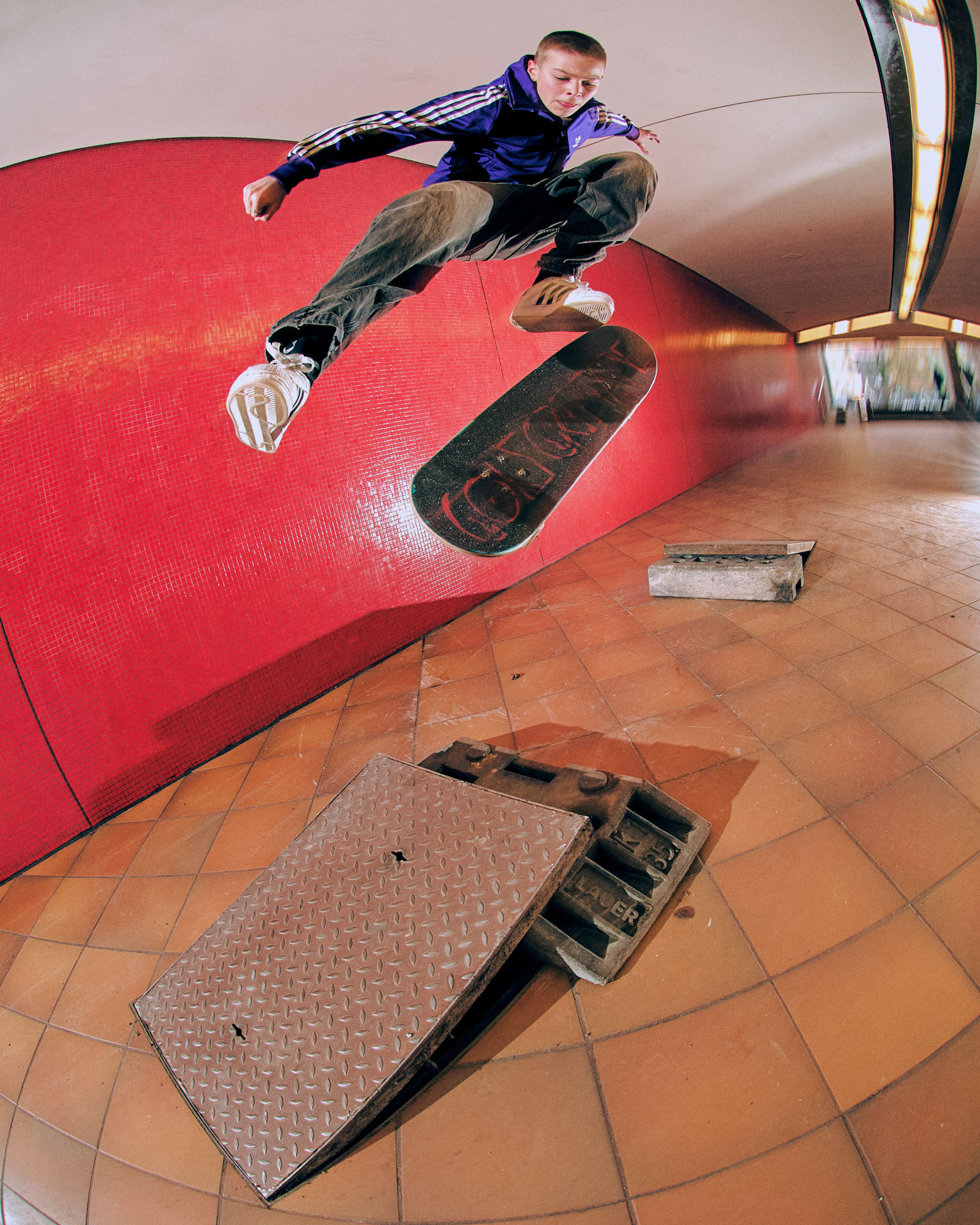
Let’s first take a look at what the world of young people is like today. The search for one's own identity is still central to this phase of life. Childhood is just behind them; adulthood is not really in sight yet. It is all about figuring out who you are and who you want to be.
Young people are not searching less for identity today. They are searching more than ever – just in a different place. In the past, you had to go outside for that: show up somewhere, be seen, rub up against people and the world. Today, a large part of that happens on social media, and social media is not a sideshow next to "real" life. For many young people, it is the main place where identity is built. That means it is where people negotiate who they are.
Of course, social media does not explain everything – and it is not all bad either. It can genuinely inspire: every video part, every tutorial, every scene worldwide is just one search away. There are still teenagers who dive deep, build crews, and skate obsessively. But the cultural conditions under which such commitment happens have changed fundamentally.
Alongside entertainment and communication, social media is above all a space for social comparison: global, permanent, and in real time. The annoying part is that we instinctively compare ourselves with people above us in the social hierarchy. Not everyone experiences it this way, but this comparison game creates pressure to conform and a strong focus on status. That produces an efficiency mindset and a drive to optimize: you start weighing which actions build status and which ones do not.
Your profile is not a shop window; it is a workbench. You post a version of yourself, the audience reacts instantly, and next time you do more of what worked. What performs grows. What gets no response disappears. Teenagers who spend hours a day in that system are not building identity alongside the platform, but inside it – according to its rules.
And this is where something basic shifts: for many young people, identity is less and less shaped by the inner question, "What feels meaningful to me?" and more by the outside answer, " How do I appear to others?"
"If you commit to one thing, you give up a thousand other versions of yourself."
In theory, social media should strengthen niches. Every scene can become visible; every clip can find its audience. It should have created the most diverse culture ever – a wild bouquet of a thousand scenes and all kinds of content. In practice, though, the algorithm is not a culture grant program. It is more like a nervous bouncer with one question: what keeps as many people here for as long as possible? So the things that win are fast, broad, and easy without context: polarizing stuff, funny videos, beauty, hustle, success, bodies, status. Content that needs patience, context, or lived experience has a harder time. The thousand niches become one giant lawn where the same cultural ideals grow everywhere.
That hits skateboarding directly. It is slow, complicated, and context-heavy. Unless someone actively searches for it, they barely see it – except maybe spectacular tricks and gnarly slams as quick entertainment. And if they do search for it, they land between gym transformations and celebrity bodies with numbers right underneath. Half a million likes for the gym clip, two thousand for the really good line. Nobody sees that as two videos. They see it as a ranking.
This creates a quiet calculation that almost nobody makes consciously but everybody feels: if you follow the dominant cultural ideals and invest, for example, in the ideal body – fit, attractive, optimized – you invest efficiently, because it pays off almost everywhere. If you invest in a Kickflip that only works after months, you may get the best feeling in the world, but not necessarily a loud echo in the feed.
Skateboarding was never mainstream, and still, something fundamental has shifted. Joining the scene used to mean giving up outside recognition – and that wasn't the obstacle. It was the seal of approval inside the scene. You were nonconformist precisely because it didn't pay off.
Today, the options for individuality have exploded, and nonconformity and creativity themselves get rewarded by the mainstream. That means they are no longer an unconditional end in themselves – they answer to the same efficiency logic as everything else: doing your own thing is now supposed to pay off too, in social status. So skateboarding doesn't lose its outsider role. It loses what made that role special: it never had to pay off. Now it does.
And with that, something flips. Commitment used to be a badge of honor: if you threw yourself into one thing fully, you were seen as real, as someone who stood for something – in short, as cool. Where the options seem endless, the same commitment now mainly looks like giving something up. If you commit to one thing, you give up a thousand other versions of yourself.
So people keep their options open and work on several identities at once. This is not an attack on young people. It is a very understandable response to a world that rewards flexibility and makes commitment to something uncertain feel risky. Flexibility is the new cool.
Anyone who thinks young people today are just lazy and glued to their phones has not been to a gym in a while. There are 16-year-olds in there tearing the place apart. They watch YouTube tutorials and track everything: protein, sleep, steps, weights. They are willing to work hard on themselves in their free time.
Going to the gym means investing in something that is widely recognized: looks, status, self-worth, and the feeling – for yourself and for others – that you have your life under control. It is an investment with a fairly reliable return.
This means skateboarding loses in at least two ways in the world young people live in. First, it does not fit well with the logic of self-optimization and visible returns. Second, it competes with a digital space of possibilities that allows a lot of identity work with less physical risk and less commitment. That does not make skateboarding worthless. It just makes it look less reasonable. Almost out of place in today's world. It feels as if young people today have less room for things that are worth doing for their own sake.
So skateboarding gets squeezed from two sides. On one side, what it demands – commitment to a difficult, stubborn thing – no longer automatically pays off in today's logic. On the other side, what once made it so powerful – expressing yourself, belonging, becoming someone – now also exists in the feed. Faster, smoother, and with fewer bruises. Push and pull at the same time. For many young people, skateboarding starts to look like a bad deal.
Difficult means difficult in the most literal sense. In team sports like soccer, you can show up on day one, kick a ball around, have fun with the group, and feel progress right away. In skateboarding, even after many hours, your ollie may barely clear a beer mat.
That stubborn resistance is the whole magic and the whole problem. Skateboarding cannot be forced. You work against an object that does not give in just because you really want it to. That is exactly what makes it special. And exactly what makes it so hard when the motivation is not deep yet.
Learning individual tricks often does not feel worth the price. You need something bigger: a crew, a sense of belonging, your own style, and the feeling of being different. Only then does frustration become meaning, and endless tries for one trick start to make sense.
That is also why skateboarding can only be scaled as a classic club or competition sport to a limited extent. Those structures live on volunteer work, and volunteer work only grows where many people stay for the long run. The Olympics can make an elite visible and fund it. But it cannot create youth culture from above.
"A course booked by parents for 10-year-olds does not create a crew feeling."
Structuring skateboarding more like a sport can create more access. It can improve training options, fit into parents’ schedules, and support talent. But it does not solve the meaning problem. Quite the opposite.
The same goes for organized entry points like workshops – as valuable as they can be. They reduce fear, teach basics, and open doors, including for people who would otherwise have a harder time finding access.
But doors are not a home. A course booked by parents for 10-year-olds does not create a crew feeling, and the question "Who do I want to be?" is not burning yet at age ten. High drop-off is not a quality problem for providers. It is in the nature of the thing.
So skateboarding is stuck in a dilemma, and that is the core of it. If it stays true to itself – unruly, resonant, but not available on demand – it keeps its magic, but the price of entry feels too high for many. If it adapts too much, it becomes organized and friendly, but no longer special enough to be worth the effort. Too hard to be chosen lightly – too unique to sell itself without losing itself.
For the skate industry, this is not just a cultural problem. It is an economic one - the core of the current industry crisis.
Skateboarding has never lived only from people who actually skate. Of course the culture needs people who ride, film, search for spots, and buy from skate shops. But economically, skateboarding has always lived mostly from consumers drawn to the image: shoes, hoodies, caps, logos, style. Since the late 90s, skate clothing and skate shoes have been the biggest economic factor in the business - and most of that market consisted of people whose skate shoes never touched griptape.
The most important product was never the deck, the shoe, or the hoodie. It was the idea of who you could be if you belonged. The culture creates meaning. The industry sells symbols. For that image to radiate into lifestyle and the mainstream, it needs young people who carry the style. Trend impulses rarely come from children or older skaters. They come from the places where style, music, clothes, language, and belonging are renegotiated: teenagers and young adults. Kids create participation. Adults create continuity. Young people create meaning.
If that group breaks away, skateboarding loses more than buyers. It loses its influencers, as we would say today – the people who turn products into symbols. This also explains why the industry feels so sluggish right now even though so many people skate: when the young middle is missing, the group that makes the image desirable in the first place is missing too. What remains is lots of skate stuff, but little meaning people are willing to pay for. The skate industry has always depended on young people creating meaning that later becomes visible, readable and buyable for others.
So what could skateboarding still offer young people – something the fast-moving digital world does not have?
Just because more young people behave like ambitious adults does not mean there is no longer a need for play, risk, experience, passion, authenticity, and deeper connection.
The best word for what skateboarding can offer as an antidote to efficiency is resonance. You do something, and something answers.
Of course the feed answers too. Likes, views, comments, shares – social media is a gigantic feedback machine. But those answers come from the outside. They mainly answer the question: How am I seen? How relevant am I? How much do I matter?
Skateboarding answers differently. It does not ask how much you matter to others. It asks what matters to you: What pulls me in? What is worth the effort? What feels like me?
The board answers. The ground answers. The spot, the crew, the city answer. Not always nicely. But at least honestly. The city starts to speak, and as a skater, you can answer it in a unique way.
"Skateboarding asks a lot before that reward becomes visible: time, pain, frustration, repetition."
This is the difference. Efficiency wants to make the world available: controllable, plannable, predictable. Skateboarding works differently. You cannot plan it however you like, force it, or optimize it reliably. Sometimes the trick works, sometimes it does not. Sometimes the world answers – and sometimes it gives you a shinner.
That is exactly the point. Skateboarding does not guarantee status, safe progression, or return without risk. But when it answers, it answers personally. Not as a number. Not as a ranking. As a real experience.
The problem is that this experience does not come before the investment, but through it. You have to experience it before you understand why it may be worth more than a safe status return. Skateboarding asks a lot before that reward becomes visible: time, pain, frustration, repetition.
Today, that investment looks more and more unreasonable. So the opportunity is not to make skateboarding more efficient. The opportunity is to make its resonance felt earlier. The feed answers the question: How am I perceived? Skateboarding answers the question: What truly matters to me?
What could a possible answer look like? The key question is: how can skateboarding offer a credible identity – one that demands less investment than the old 24/7 core identity, but still carries real meaning?
Maybe skateboarding needs a figure it has barely allowed so far: the Part-Time Skater. Not a poser, not a tourist, not a bad core skater. Someone who skates regularly, but not totally. Real enough to mean something; open enough to fit into a life full of other options.
This is not skateboarding without skill - it is skateboarding without trick-level monopoly. The entry point is the look: skate shoes, pants, the aesthetic. From there, the path leads through expanded basics. And when those basics are there, the door to style opens – a good push, a proper Tailslide, a 5-0 with speed. Style is physical. Streetwear is the invitation. Basics are the bridge. Style makes it yours. Belonging makes it meaningful.
"Skateboarding needs less focus on singled-out heroes and more focus on the group, less pure trick level and more basics with style, less contest and more gathering."
This is also skateboarding's answer to the feed. Not by chasing likes, but by making belonging visible and shareable again – a partial identity that is readable in the world where young people actually spend time. For that, skateboarding needs less focus on singled-out heroes and more focus on the group, less pure trick level and more basics with style, less contest and more gathering. And it needs social structures that share commitment instead of demanding it from each individual: open sessions instead of sign-ups, young hosts instead of coaches with clipboards, shop nights, spot tours, Most Improved instead of Best Trick. Not: "Everyone has to see how good I am." But: "I found something that means something to me." The first Kickflip can take months. The first feeling of belonging cannot.
This is not an anti-core strategy – skateboarding still needs risk, skill, street, and gnarly tricks. But if the old hero logic remains the visible front door, we lose many young people before they ever realize that skateboarding could be for them too. Make belonging easier, not lessons cheaper.
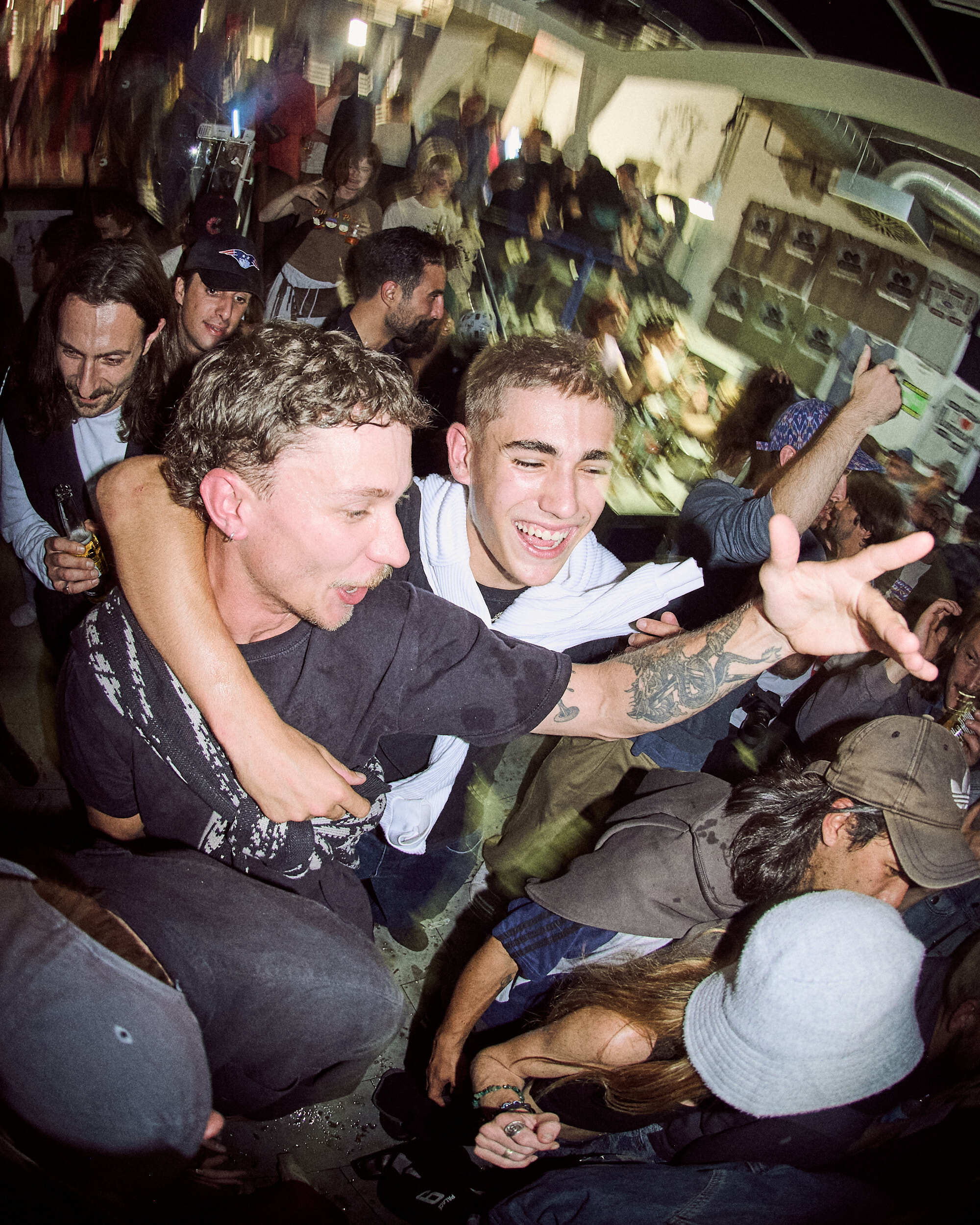
There is no way back to the 90s, and that is a good thing. The so-called Golden Era had iconic pros, strong magazines, big videos and a whole lot of exclusionary gatekeeping. Today skateboarding is more open, more diverse, more accepted. That is progress. But openness alone does not create youth culture, and participation alone does not create commitment. An open door is not a reason to stay.
So the task is not to make skateboarding even easier and even more accessible. The task is to make it feel like a deal worth taking again – in a world that has taught young people to keep every option open and orient themselves around outside evaluation.
To reach young people today, skateboarding has to give up its old claim to exclusivity. It has to make the payoff of physical effort felt earlier – long before the first Back Tail. Skateboarding has to show earlier that you do not have to be really good yet to find something of your own in it. Belonging before mastery.
It is not the 90s anymore. The swellbow will not beat the six-pack as mainstream currency. It does not have to. Skateboarding can still regain the appeal of a counterculture – not through old codes or new exclusion, but as a counter-movement to a world where everything is supposed to be visible, measurable, and optimizable.
Then skateboarding stands for something that is becoming scarce: bodily experience instead of mere performance. Inner orientation instead of outside evaluation. Resonance instead of pressure to optimize.
So the real question is not whether skateboarding can go back to what it once was. The question is whether it can still reach young people in their world – as an experience that feels meaningful today.
About the author
Veith Kilberth, PhD, is a former professional skateboarder and sport sociologist. He is CEO and co-owner of LNDSKT, a Cologne-based skatepark planning firm. His work sits at the intersection of practice, research, and skate culture, focusing on urban movement spaces, skateparks, urban planning, and youth cultures.


