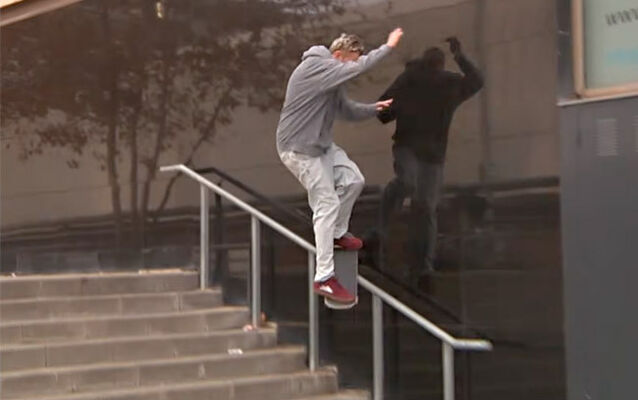
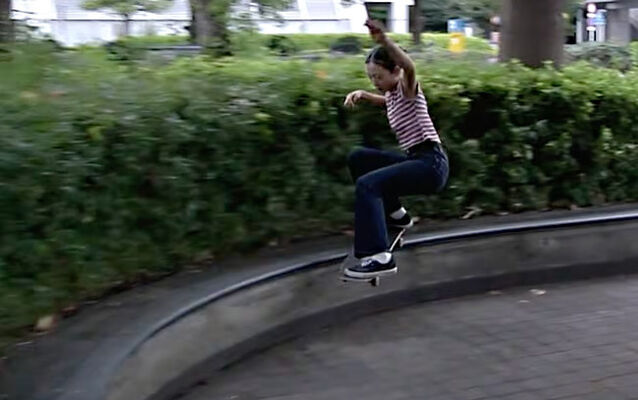
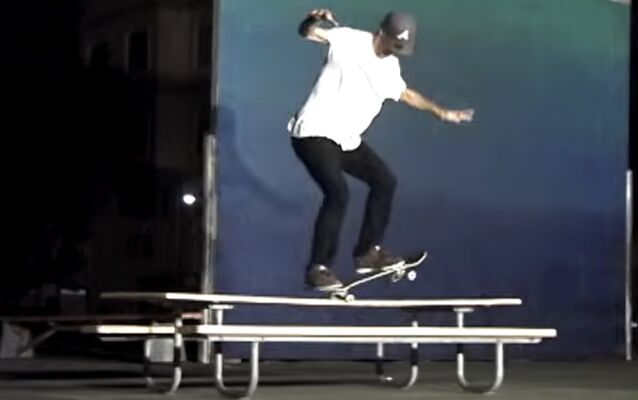
The videos Jim Craven makes are often themed. For example, with Converse he did the “Pearls” project, where they only skated spots that architect Santiago Calatrava designed. He also has a special love for ditches. He’s skated them in Iceland, Cyprus and Sri Lanka, and did the “Island” and “Land” videos which feature many ditches in the UK. That’s where it all started, and those videos have a certain magic around them. You have skateboarding in these huge concrete infrastructure buildings in the middle of nature. It feels a bit out of this world, and spots like these have a long history in skateboarding. In California, there are ditches that have been skated for a long time, just think of Geoff Rowley. It’s not only just spots designed by renowned architects but also these ordinary structures that can bring a lot of fun if you explore them on a skateboard.
I grew up close to Manchester and there is this area called the Peaks. It’s just full of those spots, because there are a lot of cities that need a lot of water. In 2015 Tom Day and I got obsessed with these ditches we kept seeing in videos. We spent an entire summer skating as many as we could in a day. You can only skate these things for a few months in the summer, the rest of the year they’re underwater. And then we thought, there’s really something there, the contrast between this big concrete monstrosity in this idyllic landscape, because that part of the world is so beautiful. Then we expanded that whole project and just kept it going for an entire year, traveled the entire UK top to the bottom and made Island.
In some older Death Skateboards videos they had those spots and me and Tom grew up loving that shit. We knew where they were, because they’re well-known UK spots. Aside from that, I was just digging around on Google Maps. I worked out this technique where you can pinpoint pretty quickly where there is a piece of infrastructure near water. But the thing that’s hard to do is discern if it’s skateable. So yeah, there was a big map of the UK that was covered in pins, and then it was colour-coded if it’s definitely a good spot or maybe a good spot, because I only could find blurry pictures or pictures where you couldn’t see the floor. So then we would drive based on that map, which was just me guessing.
Photos: Henry Kingsford
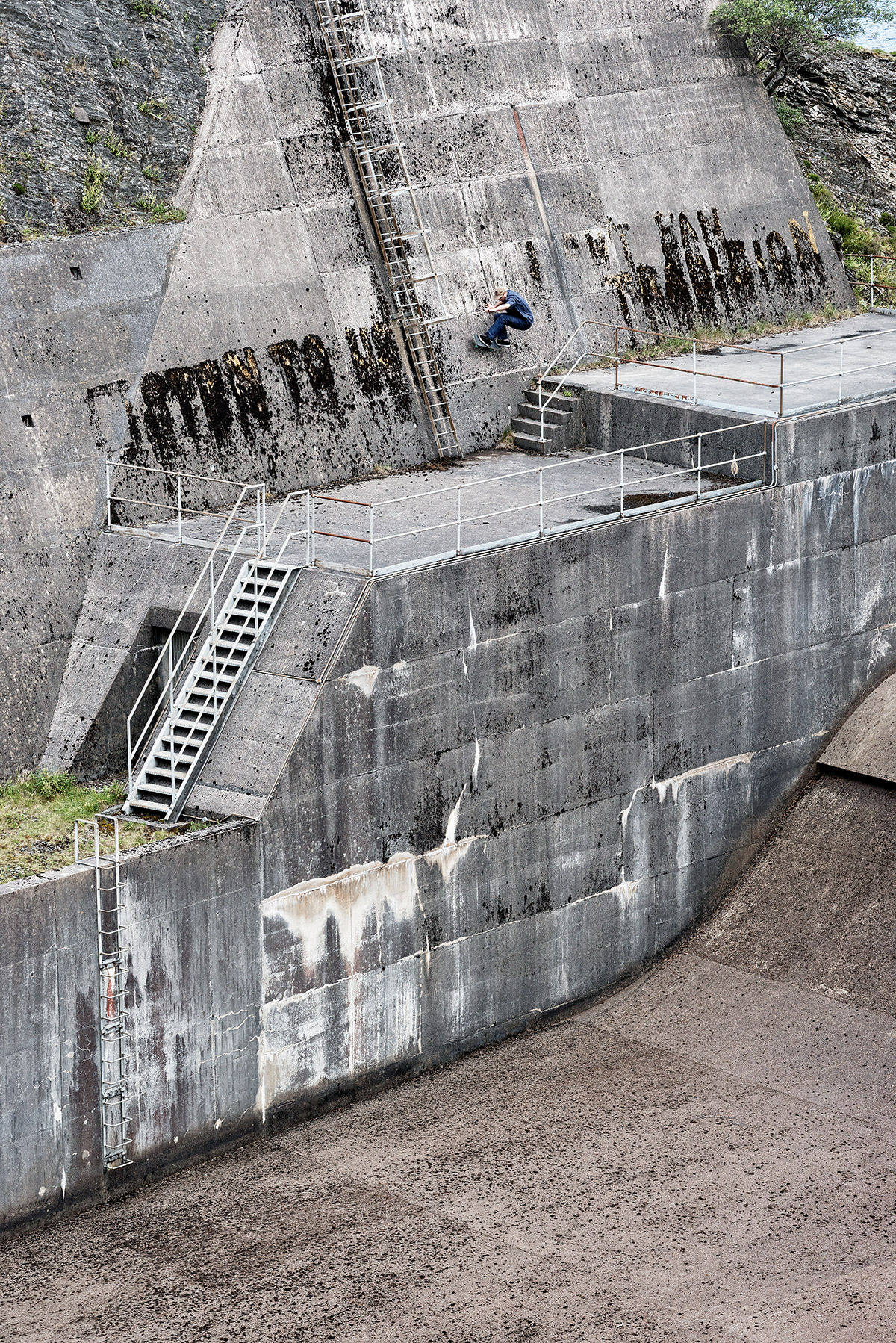
Tom Day – Frontside Wallride
I think I began to be really quite good at spotting those spots. Water runs down, obviously, so you just have to follow the rivers from the towns up to the hills. And then I became really good at knowing when a spot would be dry because I knew when they would have released the water and sent it down to the bottom. Then that one at the bottom won’t be skateable. You can find that out online because there’s a lot of civil infrastructure nerds who upload a lot of pictures. So if you click on a reservoir in England on Google, you’ll probably get 20, 30 photos, and they’ll be from all through the year, from different years. So you start to notice there’s patterns when they’re empty or full. And then you can apply that same logic to other ones and all of a sudden you start to just build up a pretty good picture of where might be good and when. But on a recent Element trip in Sweden I almost got caught out by my own fucking hubris. We arrived at this big, fucking terrifying dam in Sweden that had this quarterpipe on the bottom where all the water would come down. And then, apparently, Jaakko [Ojanen] lives in Finland, and has a similar sixth sense as me. He also said they don’t really turn them on at this time of year because of the same reason I thought. It was quite a journey to get down to the spot and somebody was just about to start going but all of a sudden a big siren came on and the water just started flowing. It turned out that, because there’d been this record-breaking heatwave, they were trying to move the water. I don’t even know how to describe the amount of water or the pressure, but if someone would’ve been down there, they would have been instantly dead. There’s been a few ditches where it’s been something I really didn’t want to do. But I think when you drive for hours to a spot it’s hard for people to accept the idea that it’s too dangerous. We were in Iceland for this Carhartt project at the, I think, biggest dam in Europe. One wrong step, and you’re dead. Felipe Bartolome and Phil Zwijsen were skating less than a meter away from this drop that would kill you. I was asking them to stay away from the edge but every time Felipe carved closer and closer.
"They’re accidental skate parks in beautiful places. And there’s just something about that that I’m drawn to."
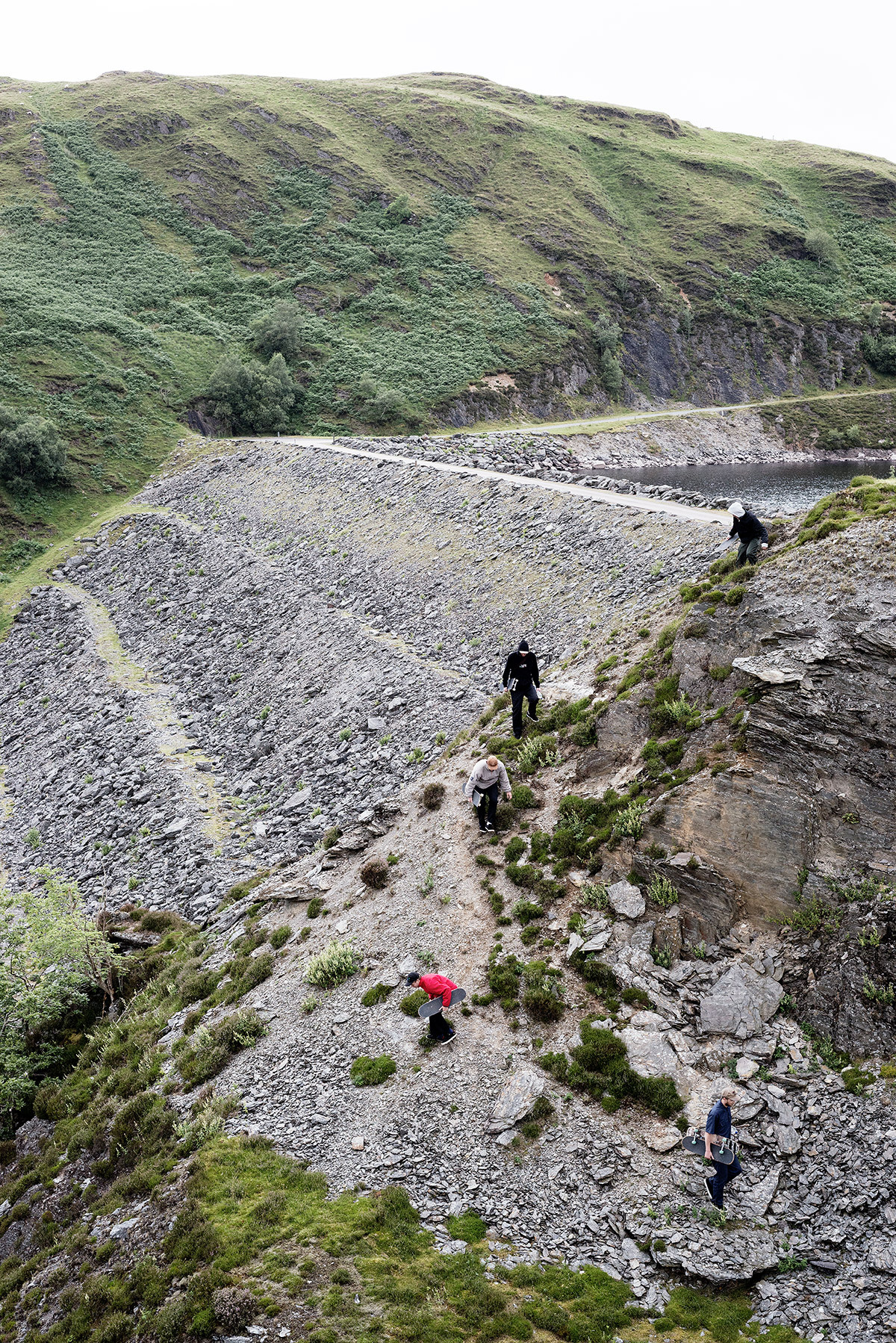
It depends where they are. For instance, in Cyprus, we did a project a few years ago that was easy, whereas in countries like Sweden or the UK, they put a lot of effort into protecting them. So you have to get pretty creative to get in, which can often make things more dangerous. There’s a spot in England, which is in the new “28 Weeks Later” movie, it was a really dangerous route to get in. People have asked me for the pin and I’ve refused to give it out because I don’t want to ever wake up and find out that someone got really hurt or worse because of a pin I sent them.
The trick is to just follow the water, really, especially in tropical countries. Because when it rains, it really rains. So they build infrastructure to avoid flooding. All you have to do is find a big river and then look near the river because they build overspill. Every place has a pretty idiosyncratic way of developing ditches, but once you learn how each place does it, it’s really not that hard to just apply that understanding to the whole country.
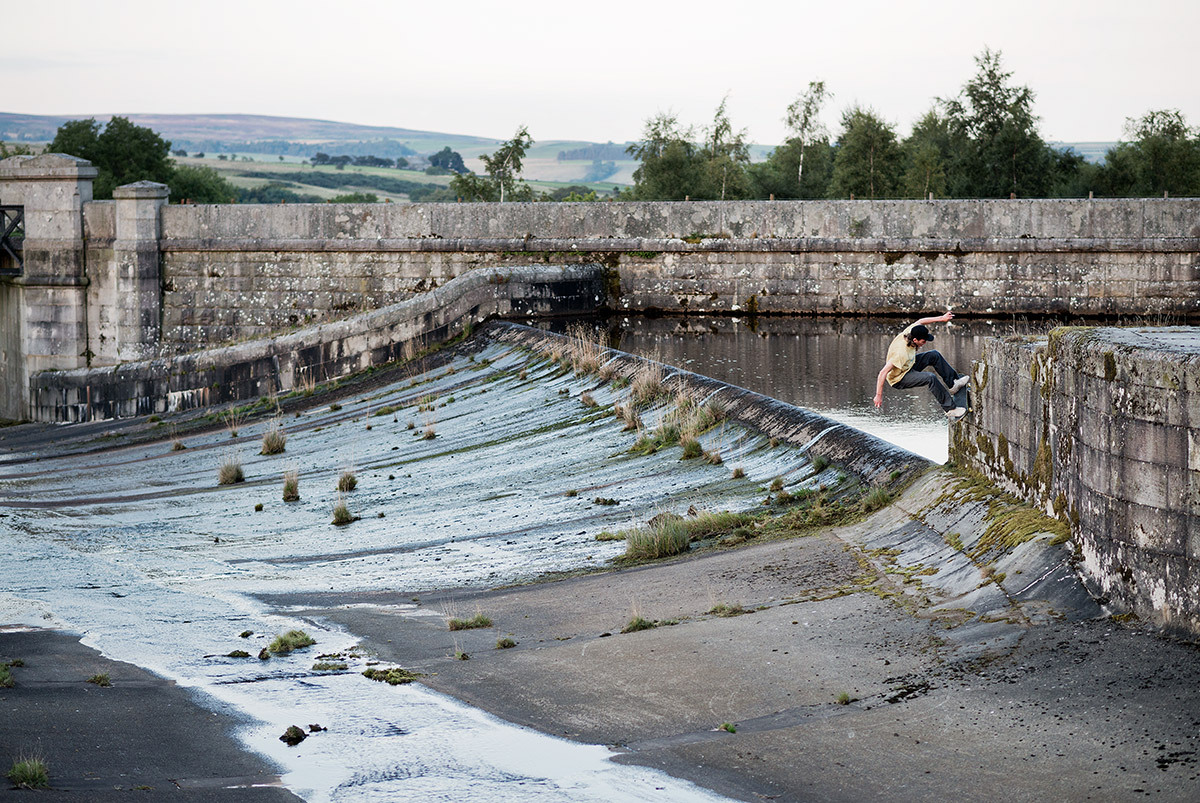
Zach Riley – Smith Stall
I think there are a lot that look really similar, but they’re boring, so I try to avoid them. But yeah, the variation, I wish I knew more about that, to be honest. Traveling through the UK, even from Northern Scotland to Central Scotland, the style of water infrastructure is completely different. And then going down into Northern England, where it’s all very old gray concrete stuff, but quite poorly built, oftentimes. I think because a lot of it is from the Victorian era, maybe. Although, I’m no expert, but I think in the UK it’s because a lot of it is very old, and then obviously some of it is very new.
Streetskating is great, but there’s something so rewarding about setting off on a journey into the unknown. That aspect of it, even if the spot sucks. I took a few days recently for this project I’ve been working on. We were in Bosnia for a day or two, most of the spots didn’t work out but I’m so glad we spent that time and effort trying because we had a great time, and one of the spots totally did work out, and it was worth it. The journey part is really fun. Then also, visually, I think there’s just something about that contrast between nature, which is usually where these ditches are placed, and these things, for want of a better term, they’re basically just skate parks a lot of the time. They’re accidental skate parks in beautiful places. And there’s just something about that that I’m drawn to.
The camping aspect of it means you don’t need to be tied down to any place. You don’t have an Airbnb to get to that evening. You can just pull. So many times we would drive to a spot late in the evening, look at it in the dark, just pitch up our tent next to it in the middle of nowhere and in the morning make some coffee and just skate a ditch. The camping helps you embrace the whole thing a bit more and makes it a more memorable experience. I think it also adds visually to the footage. You can tell that these guys haven’t come straight from a nice hotel in the inner city.