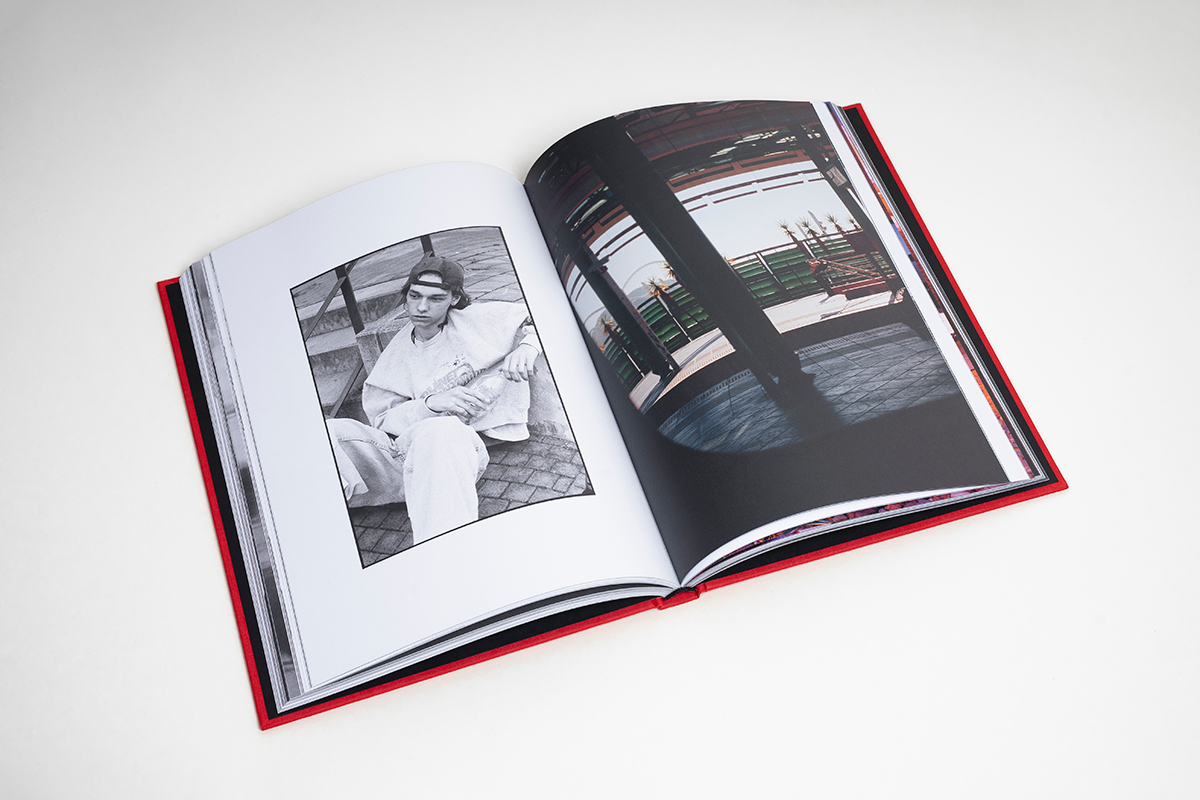
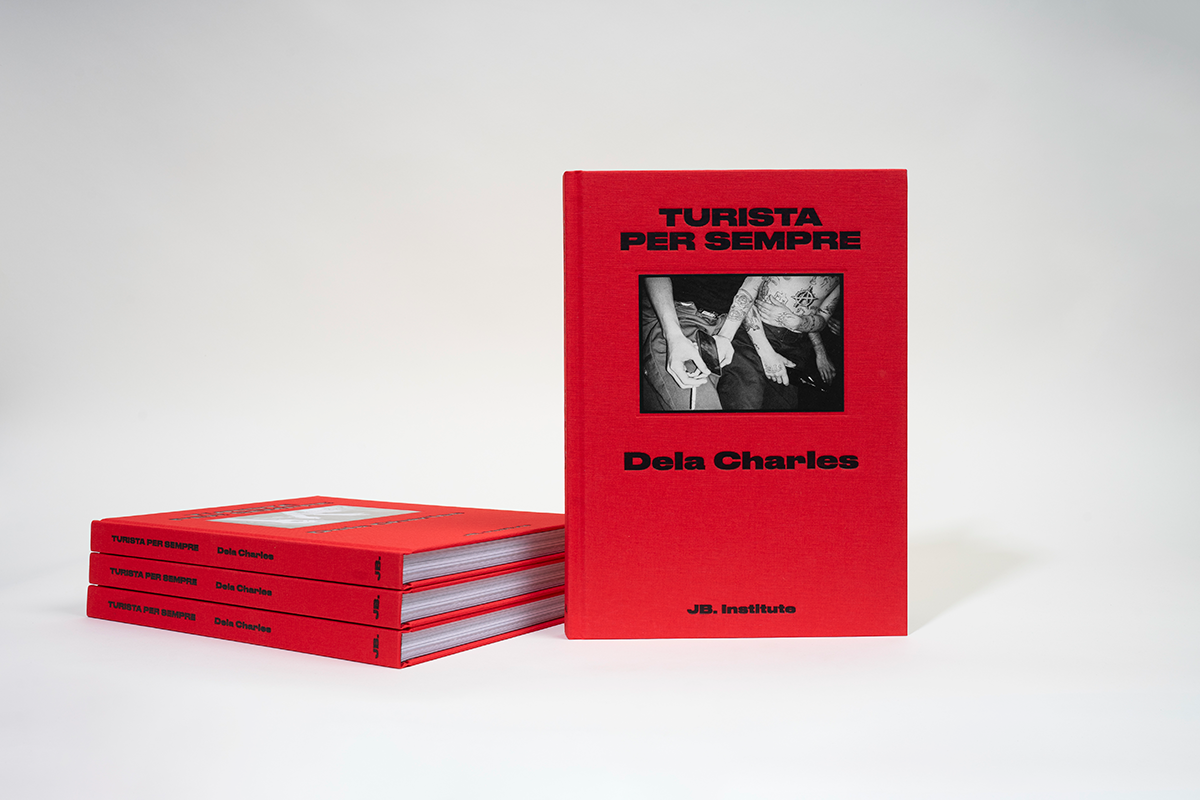
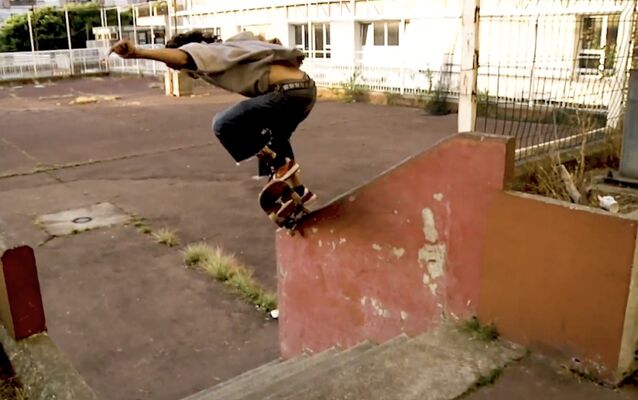
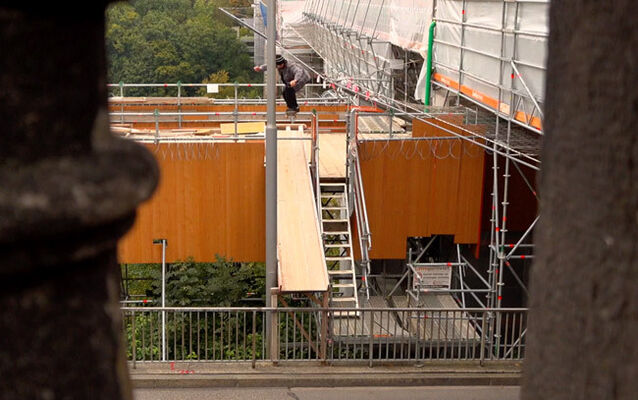
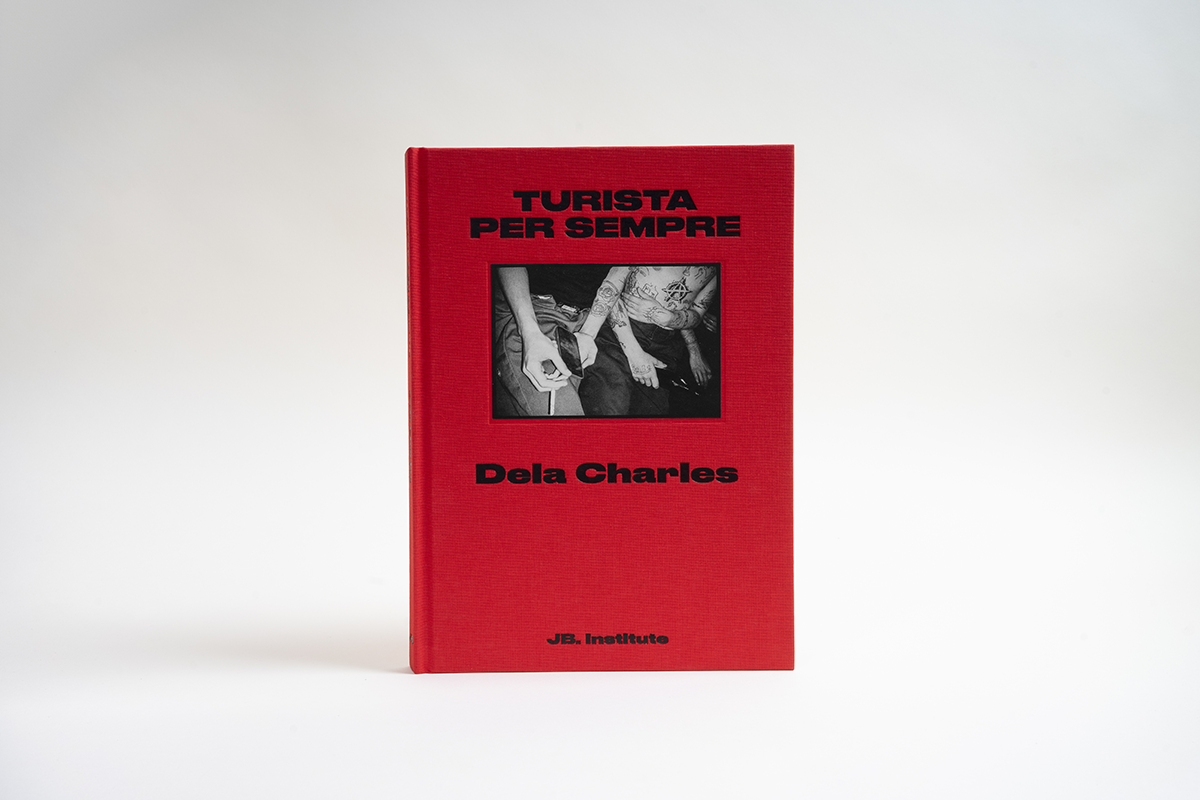
Berlin born and based Dela Charles’ first encounter with skateboarding ended in an immediate faceplant. While that didn’t dampen her enthusiasm, her mother wasn’t quite as keen on the new hobby – putting skating on hold before it had even properly begun. It wasn’t until Dela started studying Visual Communication that she picked it up again, promptly breaking her foot. Undeterred, she used the downtime to dive into another passion: photography. Today, she shoots almost exclusively on analog film, reserving digital only for skateboarding to keep costs in check. Driven by a constant urge to travel, she brings skating and photography together in long-form projects – namely photo books. Following her 2021 debut, “548 Days”, she is now ready to release her second book, “Turista per sempre”.
I could tell a few funny stories about not being taken seriously. But I think it’s something most women experience at some point in their careers, no matter what they do. It’s important to take yourself seriously. Obviously, I’ve had both good and bad times with skaters, regardless of their gender and I think as long as you care about your own business, stay friendly and treat people with respect you’re doing everything right. How others treat you depends on how good they can deal with their own insecurities. In the end I think we just want to do the same thing, go skate and get some nice clips and photos right? I always found it strange that people would ask whose photos they were whenever I showed them my work. Over the years, it definitely got easier, partly because I kept building my portfolio. But at some point, I just lost the motivation to keep following up with people. No one would ever reach out on their own when they were going skating anyway, so I figured it was a waste of time. Now my portfolio has a decent size, and ironically, I’m not even that interested in shooting skate photos anymore. Isn’t that ridiculous haha? I just want to take photos and have a good time, no matter who I’m with. Over the years, I’ve also become much pickier about the spots I shoot skate photos at. If I don’t like how a spot looks, I’d rather skate myself. I’ve spent way too much time waiting around at spots to get photos that I never ended up using for anything. I think the most important thing is to follow whatever feels right for you. Surround yourself with people you feel comfortable around. It’s as simple as that, I think. Somehow, I ended up taking a more artistic, documentary approach to skateboarding.
To be honest, I don’t really know, I think about it quite often but didn’t find the right description yet. Whenever I finish a project, I want to do something else. So I don’t even know if I’ll keep the exact same style as I have right now. I always wonder what people talk about when they tell me “I can see your signature style in it.” I don’t see it and I don’t really know how it looks, I think I’m blind to my own work.
"On Instagram you get blasted with so much information that I think 90% of the time you don’t even register anything anymore."
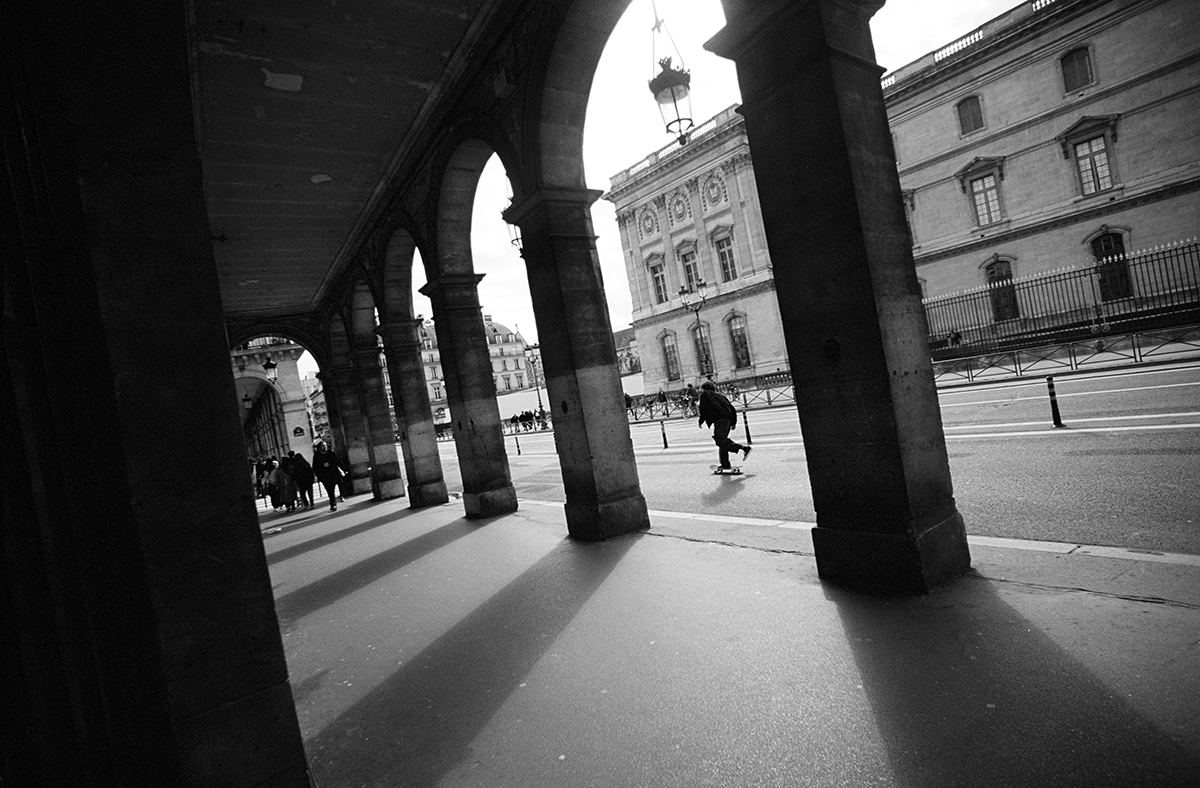
I like different things and get bored very easily. I like to play around and see what I can come up with. I can spend days just strolling through towns, seeing what catches my attention. Sometimes I skate through cities all day and end up at a spot too exhausted to even skate, but probably having shot at least one roll of film. I especially like black and white in crowded places. We’re surrounded by so many colours trying to grab our attention that I often find them distracting from the actual scenery. I mean, who decided to put bright orange trash cans all over Berlin or bright green Lime scooters and bikes everywhere? It’s so aggressive and makes street photography feel much more hectic and chaotic. Black and white allows you to focus on what you actually want to show: composition, light and the things that matter inside the frame. I think taking a good colour photograph is much harder than taking a good black and white one. It requires much more attention and planning, especially in hectic places.
It kinda sucks, but could always be worse, at some point everything was just gone anyway. I lost my apartment, lost lots of money, then my health took a hit too, and then at some point the Instagram account was gone as well. And I think at that point I was just like, “I don’t give a shit anymore.” If it had happened earlier, at a point where I hadn’t just had one setback after another, I probably would have freaked out more. At that point I was just like, “YOLO, gotta start over.” And somehow nobody really cares what you do anyway. I mean, on Instagram you get blasted with so much information that I think 90% of the time you don’t even register anything anymore. I watch stories and don’t know what I’m watching. I care less and less. I barely have it on my phone anymore if it’s not for work.
I used to do more commissioned work. For quite a while, I found myself trying to adapt to different expectations and ideas of what would work best. At some point, I realised I wasn’t really happy with the direction I was heading in anymore. Someone recently asked me, “What’s your favourite commissioned job you’ve done?” It really made me think. Especially now, when so many things are being replaced by AI, I feel like it’s more important than ever to follow my own instincts and make work that actually means something to me. I’d rather take the risk of doing things my way than keep going in a direction that doesn’t feel right. So I guess I’m just waiting for the commissioned jobs where people come along and say, “We want exactly what you do.” And if that doesn’t happen, I might become a mechanic for classic cars or whatever catches my attention next.
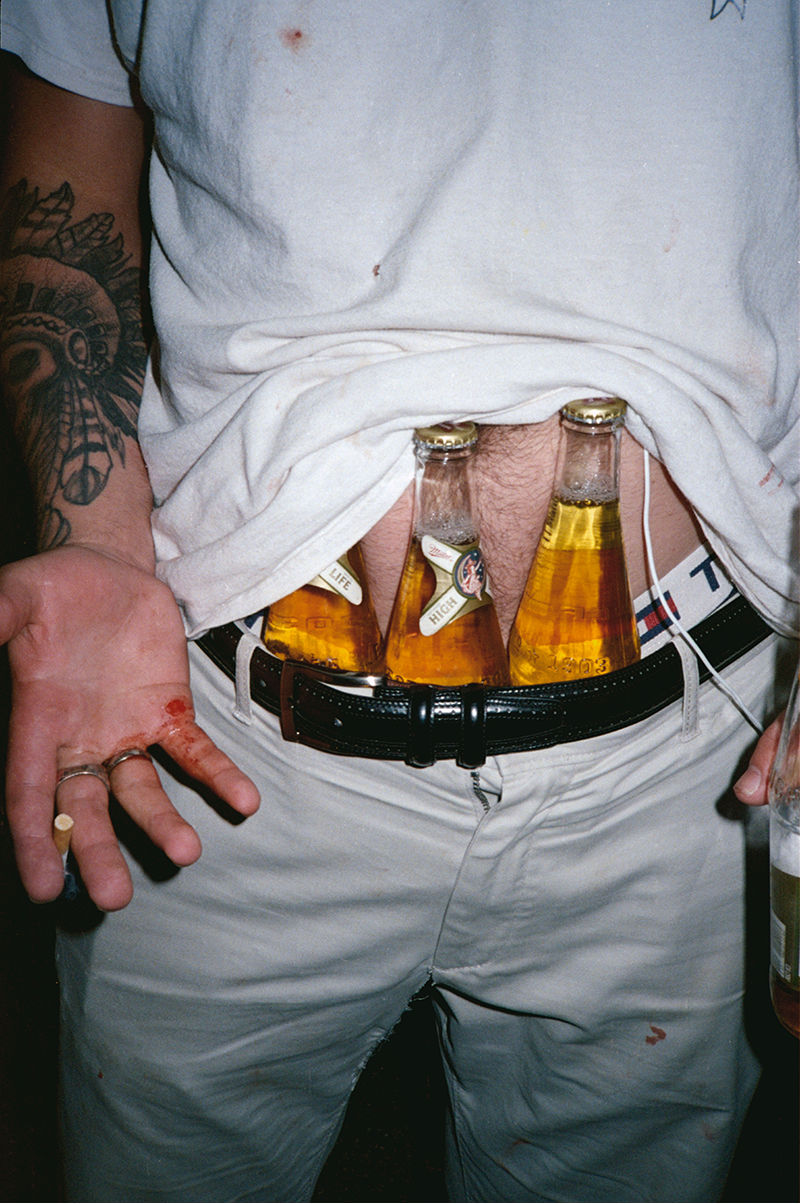
I don't really think I'm trying to express something specific with my photographs. It's more about proving to myself that all of this is real, creating living proof of the things I've experienced. Shooting analog is still a kind of craft. If I just transfer everything onto a screen, I feel like some of the magic gets lost. I think it's important to hold something finished in your hands. Printing your photographs changes the way you experience them. I guess I initially just wanted to have some of my photos printed. Otherwise, I'd probably forget about them. I didn't really know how to approach magazines back then, so I thought I'd just make my own book. I ended up finding the whole process fascinating, especially because I started with absolutely no clue what I was doing. You basically create your own story out of all the stories you've experienced. Of course, you have to kill your darlings along the way, but it's worth it. I'll keep on killing them. My favourite photos often don't even make it into the projects because some images are just too strong as standalone shots.
"Some military guys came out, took my camera and forced me to take the film out and destroy it."
Well googled! Part of my family is from northern Italy, and I kind of grew up there a bit, too. The name is definitely inspired by the Italian scratch-off lottery tickets because I thought that if I named my book after it, maybe I manifest a win. Just kidding, but obviously, it would be nice to win. One day, I was looking at all the different chapters, and the name just crossed my mind. That was already a couple of years ago. Over the years, I've played at least one lottery ticket every time I've visited Italy, and my family keeps gifting them to me, but I've never been lucky. I guess I just have to keep trying. Like with skating, don't give up. Maybe one day it'll finally work. Seriously, though, I'm a little afraid of developing a gambling addiction. I can already recognise some tendencies in myself.
It belongs to nobody. You should be allowed to do whatever you want with it, as long as you don't hurt anybody or destroy anything. Of course, it doesn't really work like that, because there are always people who, for no understandable reason, think they own it. And somehow, skating has definitely changed the way I see things. I pay much more attention to the ground now, whereas I'm usually someone who looks up all the time. I don't think there's ever been a place where nobody's asked me if I'm lost. Wherever I go, strangers seem to approach me and ask if I need help, because apparently I always look completely lost. And I'm just like, "No thanks, I'm just looking around."
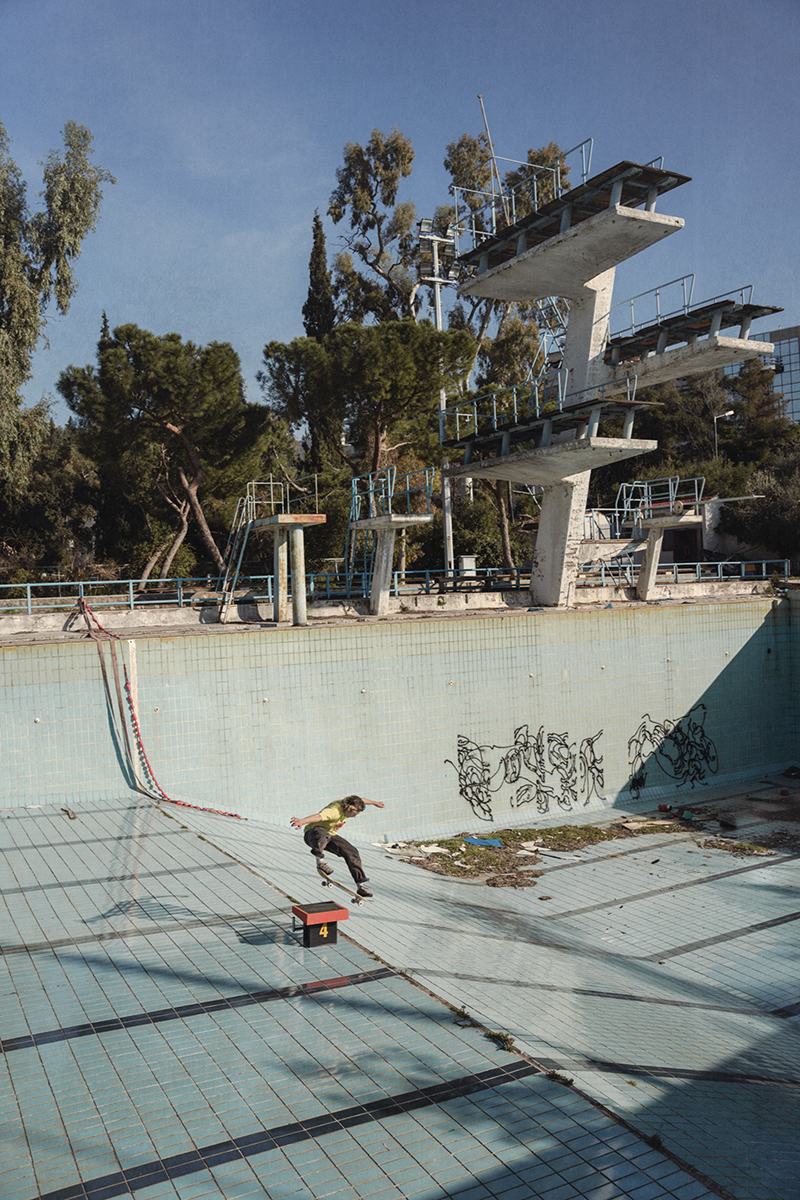
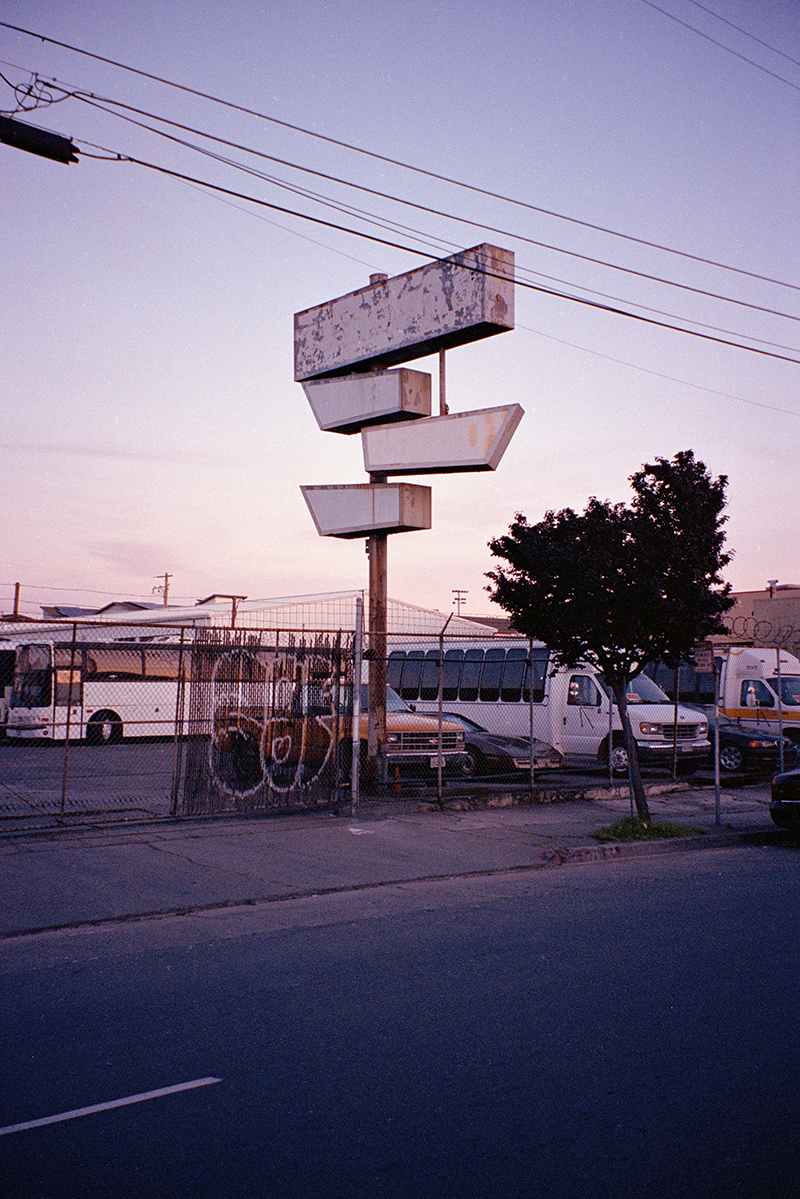
I like cars, old ones especially. They're just so stylish, with all their different colours. I often wonder what happened to all that stunning design from back in the day. As a kid, I had lots of toy cars and Lego, and I was really into both. I have absolutely no idea where that fascination comes from, but I’ve always been drawn to speed and that feeling of fresh air hitting your face when you're going fast. It just makes you feel alive, especially at night, when everything is dark and there are lights everywhere. And yeah, fences. I just like them, too. They’re a weird kind of barrier because they don’t really hide anything, they just try to keep you away. I’ve learned that you’re not allowed to photograph just any fence. In Italy, I once photographed one that apparently belonged to a military facility. Some military guys came out, took my camera and forced me to take the film out and destroy it.
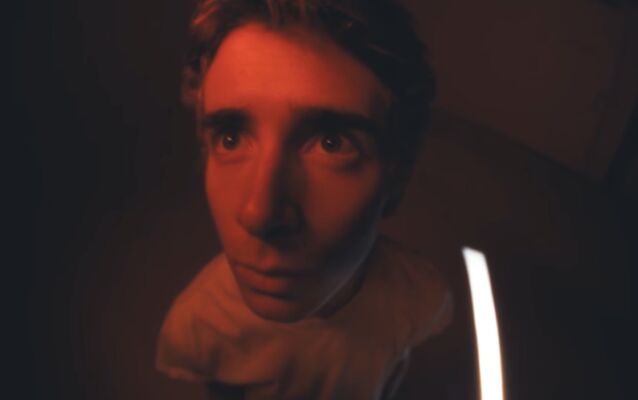
I think it’s always about aesthetics. In the beginning, I definitely shot more skate photos, but eventually realized that many of them didn't fit the visual direction of the book. I sent the best ones to magazines, and the rest are somewhere on the gram now. It took me quite some time to realise that the in-between moments are actually what I find much more interesting to show, because that's when I feel most free. Architecture, landscapes and all the places skateboarding has taken me to. Some of those places have even disappeared over the years. I think I lived this life for so many years without really documenting much, but I don't mind. Living and photographing can go hand in hand, but it can also drive you crazy. One of the nicest compliments I get is when people tell me they feel comfortable in front of my camera, especially when they normally don't like being photographed. Over the years, I’ve developed a better understanding of what I’m looking for and how I want to work. I think that confidence also helps put people at ease. Ultimately, a big part of photography is about trust. You have to create an atmosphere where people feel comfortable, because if someone feels sceptical or uncomfortable, you can see it in the pictures.
"So much went wrong over the years since I published my first book, and working on this one gave me a sense of security I couldn’t find elsewhere."
I don’t know. Sometimes you love something, like certain colours, and then suddenly you don’t like them anymore. It’s the same with food. I also never really know where I want to be. One thing I’ve noticed, though, is that whenever I stop travelling, I don’t feel quite right. I sometimes think that a lot of my struggles come from not being on the move. A good friend of mine once told me: “Dude, just book yourself a ticket and get away again. You need it.” I thought it was kind of sweet that my friends sometimes understand these things about me before I do. I don't know if I'll ever find a place where I actually want to settle. Berlin is a place I can always come back to, though. And in a way, I feel the opposite of what I think most people feel about this city. I actually find it quite calming because I know it so well. I don’t have to figure anything out here. Maybe that's what makes it a good place to return to, even if I never quite feel like staying.
For many years I’d been thinking about a format away from skating, that doesn’t need such a hardcore, coherent layout like a book. I love all kinds of arts and enjoy bringing different disciplines together through lay outing and collage. I wanted to create something that connects people and the things they make, while giving me the opportunity to travel, discover artists and collaborate with people around the world. I get bored working on one thing for too long. I need a few different things going on at once to stay creative. So I kept playing around until, after a few happy accidents, Busy Boys Limited came to life. The first Busy Boys Ltd. edition was partly inspired by my love for things nobody really needs, like home gadgets. I collect skate brand mugs and little figurines, so I wanted to make something people could have in their homes, besides books.
Yeah, a hundred percent. How often do you show up somewhere and people, if they even bother introducing themselves, automatically associate you with the guys you’re with? You’re the partner, the girlfriend, the girl someone’s dating, whatever. You often need a man to introduce you before people seem to recognise you as an individual in your own right. I think a lot of people don’t understand how annoying that is. How could they, if they’ve never experienced it? I talk about this quite often to guys, and sadly, they often don’t realize they’re doing exactly the same thing themselves. Until I point it out, at least. I hope. And to be honest, I don’t always care what people do with their lives either. But I think it comes down to a basic level of respect: treating everyone as an individual and approaching them on equal terms.
No idea. I think I just kept shifting things around over and over until something triggered a certain feeling or story in my head. It’s all very intuitive, really. I find it hard to describe my process because so much of it comes from somewhere inside me. I’d say the book accompanied me through a very long and important period of my life. It was the only constant. So much went wrong over the years since I published my first book, and I think constantly working on this one, moving things around and giving them new stories, gave me a sense of security I couldn’t find elsewhere. Somehow, it helped me find myself and create something I could truly call my own. At the same time, the book has a slightly critical stance towards the times we live in, the whole system and everything. Sometimes it feels like nothing really matters anyway. AI is coming and taking things away from us, at least for now. I think the most important thing is to live your life the way you want to, spend less time on your phone and stop giving so many fucks about what everyone else thinks. The less fucks you give, the happier you’ll probably be. I also finished a third photobook on the side. It’ll come out next year or the year after, whenever I have money again haha.
Yeah, I’m just missing the last eight photos and then it’s basically finished too. And another one is already in the making, too.